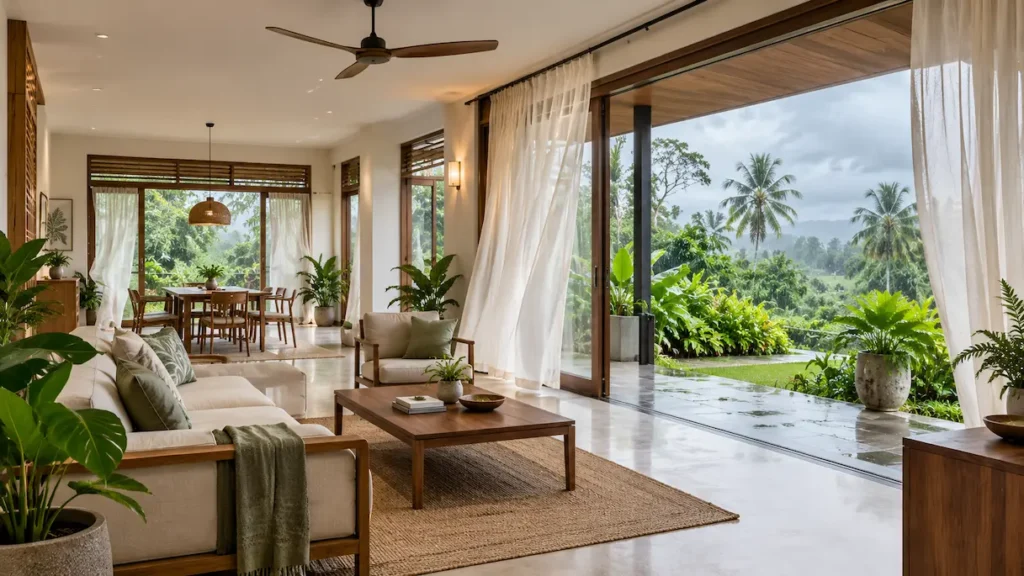
Trivandrum’s tropical climate- characterised by high heat, persistent humidity, and heavy monsoons- demands a thoughtful, climate-responsive approach to home interior design. A well-planned interior not only enhances comfort and aesthetics but also protects your home from moisture damage, mould, and heat buildup. For homeowners seeking a durable, breathable, and stylish living space, partnering with an experienced home interior designer in Trivandrum can make all the difference.
Understand Trivandrum’s Climate Before Planning Your Home Interior
Trivandrum experiences a warm and humid climate year-round, with average temperatures ranging between 26°C and 32.5°C and high relative humidity, especially during the monsoon season. This combination of heat and moisture creates unique challenges for interiors: wooden furniture can warp, walls may develop damp patches, and poor ventilation can lead to mould and mildew.
Before finalising your home interior plan, it’s essential to account for these climatic factors. A climate-first approach ensures your materials, layout, and finishes can withstand Trivandrum’s conditions while keeping your home cool and comfortable. This is where the expertise of a skilled home interior designer becomes invaluable- they can customise every design decision to your home’s specific exposure, airflow patterns, and moisture zone
Prioritize Natural Ventilation and Airflow

In a hot and humid climate like Trivandrum’s, ventilation is the single most important strategy for thermal comfort. Good airflow helps evaporate sweat, reduces perceived temperature, and prevents moisture buildup that leads to mould and odours.
To maximize natural ventilation:
- Design for cross-ventilation: Place windows and openings on opposite or adjacent walls so breezes can flow through rooms. Ideally, position inlet openings smaller on the windward side and larger outlets on the leeward side to create a vacuum effect that accelerates airflow.
- Use high-level vents and clerestories: Warm air rises, so high windows, jalousies, or roof vents allow hot air to escape while drawing in cooler air from lower openings.
- Avoid blocking airflow with partitions: Opt for open-plan layouts or permeable partitions like wooden slats, fluted glass, or CNC jali screens that maintain privacy without stopping air movement.
- Incorporate courtyards or internal wells: In deeper homes, a central open space acts as a chimney for hot air and brings in daylight and fresh air.
Ceiling fans should be used to supplement natural ventilation, especially on still days, to ensure continuous gentle air movement throughout the home.
Choose Moisture-Resistant Materials for Your Home Interior
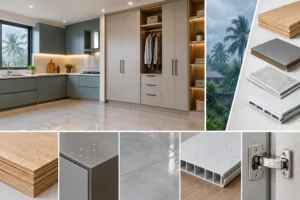
Trivandrum’s humidity and monsoon rains mean moisture resistance is non-negotiable for interiors. Using the wrong materials can lead to swelling, peeling, fungal growth, and costly repairs.
Recommended materials for humid climates include:
- BWP (Boiling Water Proof) or BWR (Boiling Water Resistant) plywood: These marine-grade plywoods are ideal for kitchen and wardrobe carcasses, as they withstand prolonged exposure to moisture.
- WPC (Wood Plastic Composite) and PVC: Smart alternatives for wet zones like bathrooms and utility areas, offering excellent water resistance and durability.
- Tiles, natural stone, and ceramic: For flooring, these materials are cooling, durable, and mould-resistant- perfect for Kerala’s climate.
- Moisture-resistant laminates and PU-coated hardware: Seal all cut edges of plywood and use anti-microbial PVC edge banding and stainless steel (SS 316) hardware in damp zones to prevent corrosion and microbial growth.
Avoid raw MDF, particle board, or untreated solid wood in high-moisture areas, as these absorb water and degrade quickly.
Select Climate-Friendly Furniture, Wardrobes and Storage
Furniture in Trivandrum must be chosen not just for style but for its ability to handle humidity and monsoon conditions.
Key considerations:
- Frame materials: Plantation teak (locally grown and acclimatised to Kerala’s humidity) is ideal for furniture frames. For wardrobes and storage, BWP/BWR plywood with moisture-resistant finishes ensures longevity.
- Upholstery: Choose performance fabrics over leather or natural fibres, as they resist mould and are easier to clean and dry.
- Placement: Keep furniture a few inches away from exterior walls, which absorb more moisture during monsoons.
- Storage design: Incorporate ventilation gaps in wardrobe and cabinet designs to allow air circulation and prevent dampness.
Materials like cane, rattan, bamboo, and cork are also excellent for accents and cabinetry, as they are naturally resistant to humidity and add a light, breathable aesthetic.
Use the Right Colours, Fabrics and Finishes
Colour and finish choices can significantly influence how hot or cool a space feels.
- Colours: Light, reflective colours such as whites, pastels, and soft neutrals help bounce light and keep interiors feeling cooler. Dark colours absorb heat and can make rooms feel warmer.
- Fabrics: Opt for breathable, quick-dry fabrics like cotton, linen, and performance blends for curtains, cushions, and upholstery. Avoid heavy, moisture-trapping materials like velvet in high-humidity areas.
- Finishes: Matte or satin finishes are preferable to high-gloss in humid climates, as they show fewer water marks and are easier to maintain. For walls, use washable, anti-fungal paints designed for tropical conditions.
Dehumidifiers can be used in rooms with wooden furniture or during peak monsoon weeks to control moisture levels and prevent mould.
How a Home Interior Designer in Trivandrum Can Create a Climate-Responsive Home
Designing a home for Trivandrum’s climate requires more than just picking the right materials—it demands a holistic understanding of orientation, ventilation, moisture zones, and local building practices. This is where Gruhem Interiors, a trusted home interior designer in Trivandrum, adds immense value by creating climate-responsive interiors that combine comfort, functionality, and lasting durability.
A skilled home interior designer will:
- Assess your home’s microclimate: They’ll evaluate sun exposure, prevailing winds, and moisture-prone areas to create a customised design plan.
- Specify the right materials: From BWP plywood for wet zones to breathable fabrics and mould-resistant finishes, they ensure every material is fit for purpose.
- Optimize layout for airflow: They’ll design open, breathable layouts with strategic openings, partitions, and ventilation features to maximize comfort.
- Integrate passive cooling strategies: Techniques like shading, reflective roofing, elevated floor plates, and stack ventilation can be incorporated to reduce reliance on air conditioning.
- Deliver durable, low-maintenance interiors: With the right design, your home will not only look beautiful but also withstand Trivandrum’s climate for years with minimal upkeep.
For homeowners in Trivandrum, investing in a climate-responsive interior designed by an experienced home interior designer ensures a home that is cool, comfortable, and built to last.