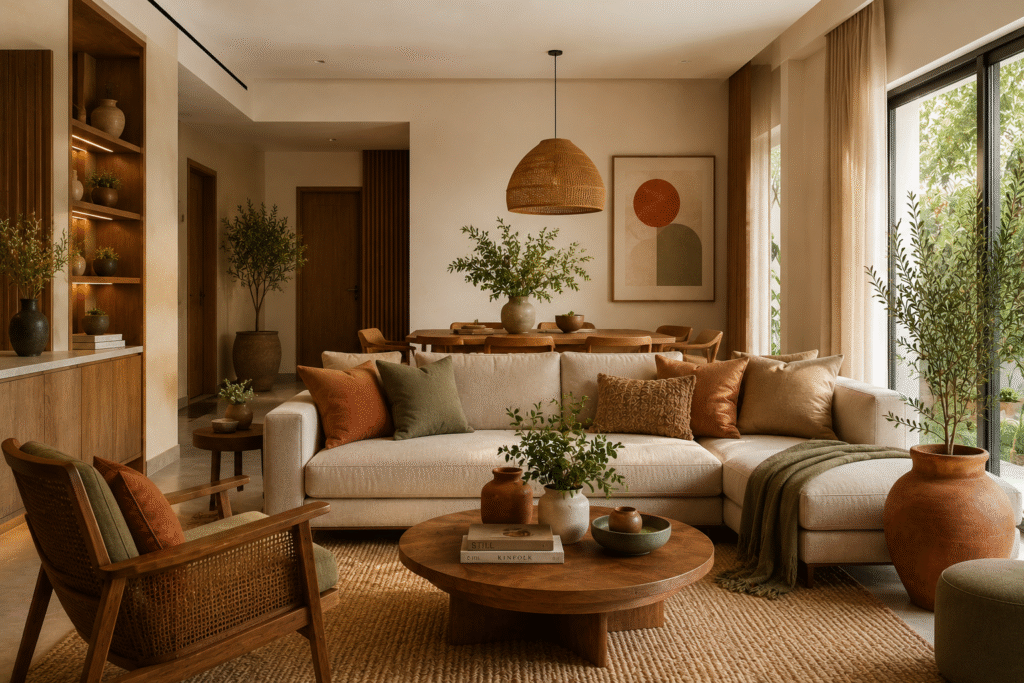
Modern homes often adopt minimalist designs that celebrate clean lines, uncluttered layouts and carefully selected furniture. Yet, when minimalism is taken too far, a space can sometimes feel cold or impersonal. Earthy colour tones, inspired by soil, stone, sand, clay, foliage and natural wood, bring softness, warmth and character into contemporary spaces without compromising their modern appeal. From warm beige walls and terracotta accents to olive green cabinetry and walnut furniture, earthy shades can transform a home into a space that feels grounded and welcoming. They work beautifully with natural materials, subtle textures and plenty of natural light, making them especially suitable for homes that seek a balance between contemporary aesthetics and Kerala’s connection with nature.
For homeowners planning a modern home interior design, earthy colours offer an adaptable palette that can evolve with changing styles. They can create a quiet bedroom, an inviting living room, an elegant dining space or a sophisticated modular kitchen. More importantly, they allow modern interiors to feel lived-in rather than overly styled.
The warm brown of timber, the muted green of leaves, the sandy beige of a beach, the reddish brown of clay, the soft grey of stone and the creamy tones of natural fibres are warm, earthy colours inspired by the natural world. Unlike extremely bright or artificial-looking colours, earthy shades tend to have a naturally subdued quality. They can range from light and airy to deep and dramatic.
Some popular earthy colours include beige and sand, taupe, warm white, terracotta, clay, rust, cinnamon, ochre, olive green, sage green, moss green, warm grey, mushroom, chocolate brown, walnut, and muted charcoal.
One of the biggest advantages of earthy tones is their versatility. A soft beige can act as a neutral backdrop, while terracotta can introduce personality. Olive green can add depth, whereas walnut brown can create richness. Earthy tones do not necessarily mean making an entire home brown or green. Instead, the idea is to build a layered palette where colours, materials and textures work together.
This balance is particularly relevant to Kerala homes, where natural materials, greenery, timber and traditional craftsmanship have long been part of the design language. Modern interiors can reinterpret these influences in cleaner, more contemporary ways. Gruhem’s approach to Kerala home interiors similarly recognises the value of combining contemporary functionality with local character and natural materials.
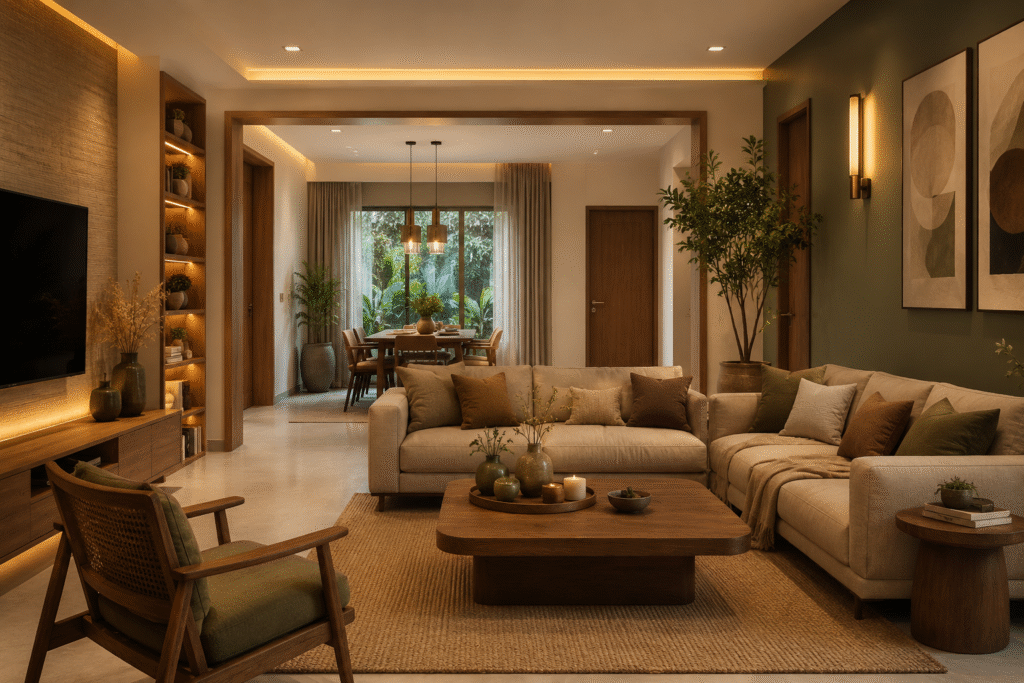
The popularity of earthy colours is not simply about following a trend. These shades solve several common design challenges while creating a comfortable visual environment.
Minimalist interiors typically rely on simple furniture, clean surfaces and restrained decoration. While this creates a sense of order, too much white, grey or stark black can make a room feel distant. Earthy shades introduce warmth without creating visual clutter. A warm beige wall or wooden cabinet can soften an otherwise highly structured space.
Modern homes increasingly seek ways to bring nature indoors. Plants, natural light, timber, stone and organic materials can all contribute to this feeling. Earthy colours reinforce that connection. A sage-green accent wall, terracotta planter or sandstone-inspired finish can make a room feel visually connected to the outdoors.
This works particularly well in Kerala, where greenery and tropical surroundings naturally influence the way homes are experienced. Thoughtful use of daylight, wood, stone, plants and earthy colours can create interiors that feel more connected to their environment.
Colour influences how a room is perceived. Warm neutrals and natural shades can make living spaces feel comfortable and inviting. This is especially useful in areas such as living rooms and dining spaces, where families gather and guests are welcomed. Instead of relying heavily on decorative objects, colour itself can establish the mood.
Earthy tones are remarkably adaptable. They can be used in contemporary interiors, minimalist homes, japandi-inspired spaces, modern rustic interiors, scandinavian-inspired designs, transitional interiors, modern kerala homes, and modern tropical interiors.
The same colour can also look completely different depending on its surrounding materials. A terracotta shade paired with brass and carved wood can feel traditional, while the same colour used with black metal and streamlined furniture can look distinctly contemporary.
Some bold colour trends can become dated quickly. Earthy neutrals tend to have greater longevity because they are rooted in natural landscapes rather than short-lived colour fads. This makes them a practical choice for homeowners who want a modern home that continues to look relevant for years.
When carefully selected and paired with refined materials, they can create an extremely sophisticated interior. A palette of taupe, walnut and muted olive, for example, can feel luxurious when combined with elegant lighting, high-quality finishes and well-designed furniture. With professional planning, modern interiors can bring together colours, proportions, lighting, furniture placement, materials and functionality.
There is no single earthy palette. Different combinations can create entirely different moods, and the best colour palettes will depend on the space it is being planned for.
This palette works especially well in living rooms and bedrooms because it creates a calm and timeless atmosphere. Using cream or warm white as the base, introduce beige through upholstery or walls, and bring in walnut through furniture, cabinetry or decorative elements.
Terracotta brings energy into an earthy palette without becoming overwhelmingly bright. Pairing a muted terracotta with sandy beige and warm off-white can work beautifully as an accent wall, artwork, cushions, rugs or selected furniture pieces.
Olive green is an organic yet contemporary choice for homeowners who want colour without sacrificing sophistication. An olive-green accent wall can complement a beige sofa, timber furniture and indoor plants. Alternatively, olive can be introduced through kitchen cabinetry or upholstery.
For smaller homes or rooms with limited natural light, sage green offers a softer alternative to darker greens. Combine it with warm white and light-toned wood to keep the room feeling open. This palette works particularly well in bedrooms, study areas and relaxed living spaces.
For a richer and more dramatic interior, combine rust with chocolate brown and cream. This palette is particularly effective in larger rooms where deeper shades can be balanced with sufficient natural or layered artificial lighting.
If you prefer a cooler modern aesthetic but still want warmth, taupe can bridge the gap between grey and beige. Pair it with stone-inspired grey, warm timber and textured fabrics for a sophisticated, understated and highly adaptable
Along with colour, texture plays an important role in creating warmth. One of the best ways to make an earthy palette feel sophisticated is to combine several natural-looking materials rather than using the same finish everywhere.
Wood is perhaps the most natural partner for earthy colours. Oak, walnut, teak and other timber finishes can add depth and warmth to modern interiors. Wood can be incorporated through flooring, furniture, wardrobes, wall panels, ceiling details and kitchen cabinetry. In Kerala homes, timber also creates a visual connection with traditional design while fitting comfortably into contemporary interiors.
Stone introduces a grounded, tactile quality. Natural stone, stone-look tiles and textured surfaces can work beautifully with beige, taupe, brown and olive palettes. A stone feature wall can become the focal point of a living room without requiring excessive decoration.
Soft fabrics prevent earthy interiors from becoming visually heavy. Linen curtains, cotton upholstery, cushions and bedding can add a relaxed quality. Their slightly irregular texture also reinforces the natural character of the colour palette.
Jute rugs, cane furniture, woven baskets and handcrafted accessories can add organic texture but should be used selectively in modern interiors. Too many rustic details can make the design feel themed rather than contemporary.
Matte surfaces work particularly well with earthy colours because they absorb light softly rather than creating excessive reflection. Matte cabinetry in olive, taupe or warm beige can look elegant and contemporary.
Earthy palettes can provide contrast when combined with glass and metal. Clear glass keeps spaces visually light, while black, bronze or brushed metal accents can add definition. The key is balance where natural materials provide warmth, and modern finishes maintain the contemporary character of the home.
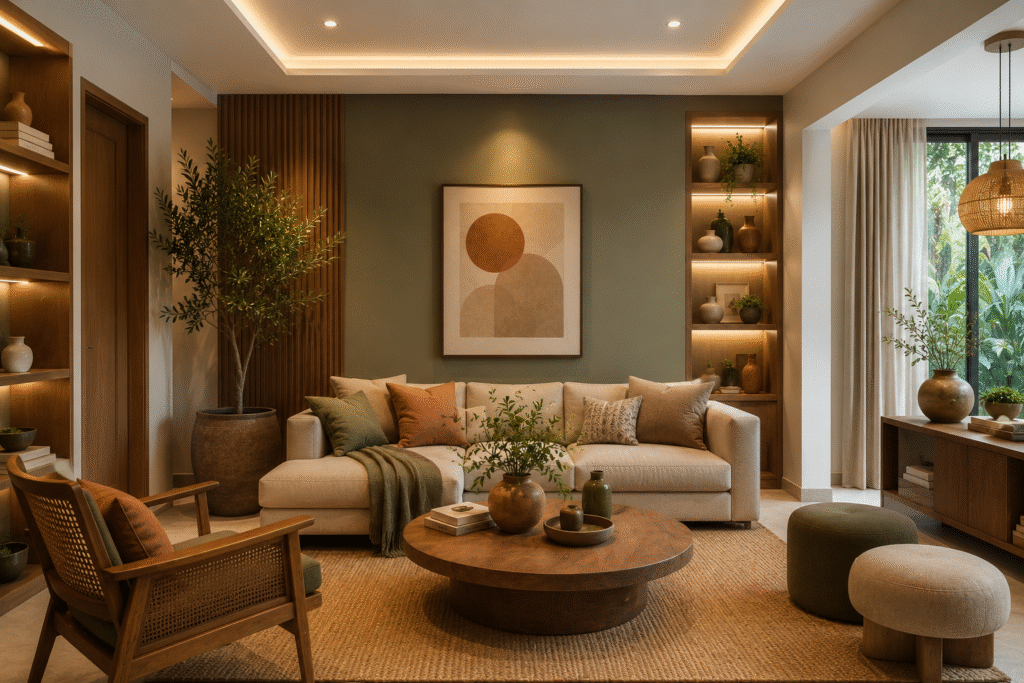
Earthy colours are forgiving, but poor combinations can make a space feel dull, dark or overly rustic.
A room filled with beige, brown and tan can become visually flat. The solution is to introduce contrast through texture, depth and carefully selected accent colours.
Earthy design does not mean covering every surface in wood or brown. Use brown as one component of the palette and balance it with cream, green, stone, soft white or muted colours.
A colour that looks beautiful in a showroom may appear completely different at home. Natural and artificial lighting can significantly influence how earthy shades are perceived. Darker colours should be used carefully in rooms with limited daylight.
Earthy interiors generally work best with a controlled palette. Choose a dominant neutral, one or two supporting shades and perhaps a deeper accent. This keeps the interior cohesive.
Flat colour without texture can make even a beautiful palette feel lifeless. Introduce fabrics, wood grain, stone finishes, rugs, artwork and subtle wall treatments to create layers.
A beautiful Pinterest-inspired palette may not necessarily suit your home. Think about how you use each room, how much natural light it receives, your existing furniture and how much maintenance you are comfortable with.
Good modern home interior design should ultimately make everyday living easier and more enjoyable.
Earthy tones have a special ability to make contemporary homes feel warmer, calmer and more personal. For a modern home, the secret is not simply choosing an earthy colour. It is about understanding how that colour interacts with natural light, furniture, textures, flooring, cabinetry and the overall architecture. A well-planned combination of warm neutrals, natural materials and carefully selected accents can turn a minimalist space into one that feels comfortable and lived-in.
This is where the expertise of modern interior designers in Trivandrum can make a meaningful difference. Gruhem Interiors approaches each project as an opportunity to create a home around the people who live in it. With extensive experience, in-house manufacturing capabilities and a focus on personalised design, Gruhem brings together aesthetics, functionality and craftsmanship. Gruhem can help you explore earthy palettes that complement your lifestyle and the character of your space to create a home that looks fashionable today, and continues to feel welcoming, practical and distinctly yours for years to come.
